Japan is not just a country; it’s a feeling. It’s the quiet scraping of a wooden spoon against the perfect bowl of ramen, the sound of cicadas in a hidden temple garden, the gentle hum of a Shinkansen gliding through the landscape. Anyone visiting Japan should embrace the unexpected—alleys that lead to the best bars, unassuming restaurants serving Michelin-worthy dishes, and moments when everything suddenly stands still. We’re sharing our favorite places—for sleeping, indulging in culinary delights, and simply lingering. Vibrant and inspiring Tokyo meets the slowed-down, poetic Kyoto; traditional tea houses stand alongside avant-garde design hotels, and in Naoshima, art merges with nature.
TOKYO – the city that never stops
WHERE TO SLEEP
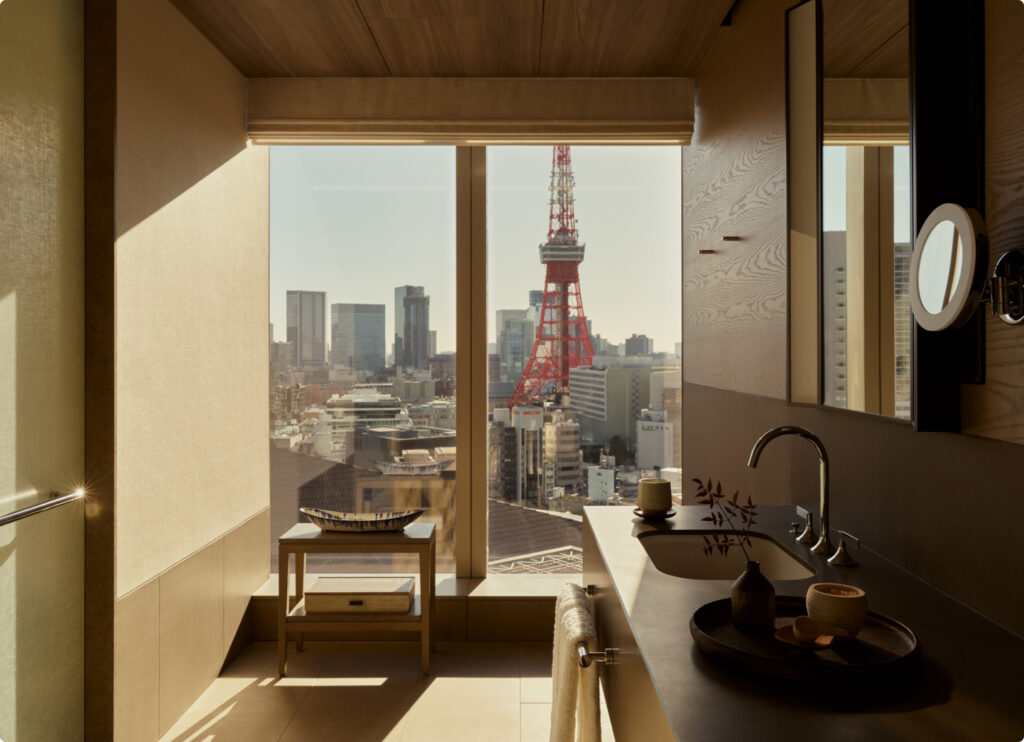
Tokyo is a city that never takes a break. It glows, vibrates, and changes by the second. And yet, there are places where the pace slows down, where the city grows quieter without losing its intensity. Janu Tokyo is one such place—a retreat located at the heart of the action yet radiating a nearly meditative atmosphere. Designed by Jean-Michel Gathy, the architect behind iconic sanctuaries like Aman Tokyo, Janu combines warm materials with the clarity of Japanese design principles. Every detail is meticulously considered, every space feels intuitively right. The spacious rooms with floor-to-ceiling windows frame the skyline like a work of art. By day, soft light bathes the rooms in gentle tones; by night, the city shimmers like a stage set in the distance. And then, there’s the in-house spa—a world of its own. More than 4,000 square meters dedicated to the art of deceleration. Hot onsen baths, steam rooms, and treatments that bring body and mind into balance. While Tokyo’s rhythm never stops outside, here, you find a moment of weightlessness. www.janu.com/janu-tokyo
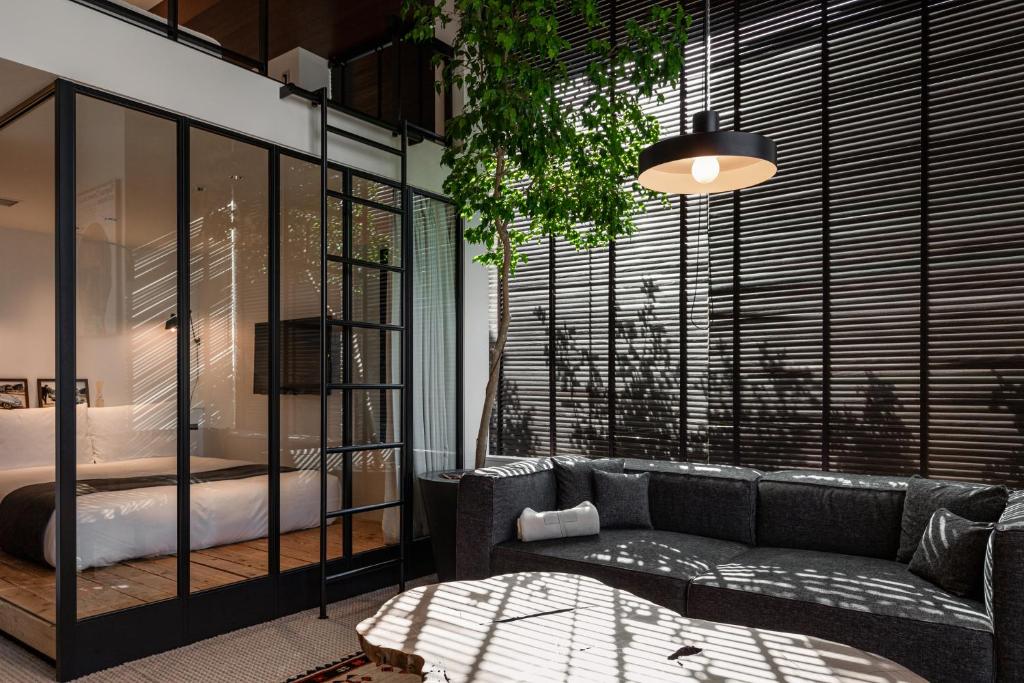
Stylish, relaxed, and with just the right amount of understatement—Trunk Hotel is more than just a hotel; it’s a meeting place for Tokyo’s creative scene. Located in Shibuya, it blends Japanese simplicity with an urban cool factor: concrete meets warm wood, large glass fronts open to green courtyards, and the rooms exude a laid-back elegance. Minimalist, yet never impersonal—every detail is deliberately chosen, from the handcrafted furniture to the sustainable care products. The heart of the hotel? The Trunk Bar, where guests and locals mingle over craft cocktails. Add to that a concept store featuring curated Japanese design and an atmosphere that feels more like a friend’s loft than a classic hotel. If you want to be in the middle of Tokyo without feeling overwhelmed, this is the place—modern, local, and with just the right touch of casual luxury. www.catstreet.trunk-hotel.com
WHERE TO EAT
SUMI is a place of reduction—to the essentials, to perfection. No overwhelming menu, no distractions—just outstanding ingredients, precisely prepared, and served in an atmosphere of tranquility. The open kitchen is the heart of the restaurant. The chef works right in front of the guests, with calm, precise movements—almost like a ceremony. The dishes are minimal yet full of depth—finest Wagyu, perfectly grilled fish, seasonal vegetable compositions that rely on just a few, perfectly placed flavors. Each ingredient is given space, nothing is overloaded, everything is in balance. Simply put, perfection in its purest form—exactly what one expects from Japan. And then there’s the view of the skyline with Tokyo Tower—a quiet, artful “wow” moment!

An evening at Shirosaka feels like a journey through Japanese cuisine. Kappo means “prepared directly in front of the guests,” and that’s precisely what happens here—with quiet, precise gestures and an effortless elegance that is unparalleled. Each ingredient is treated with the utmost respect—juicy Wagyu, tender, perfectly grilled fish, a Dashi broth that tastes like perfection. The presentation? Pure, yet never accidental. The atmosphere? A warm and welcoming team that makes you feel like visiting good friends. Dining here isn’t just a meal—it’s an encounter with true Japanese hospitality. Unpretentious, precise, and with a depth that lingers long after.

WHERE TO HAVE A BREAK
Amidst Tokyo’s fast pace, the Sakurai Tea Experience is an oasis of calm—minimalist, elegant, with an almost meditative atmosphere. Here, tea is more than just a beverage; it’s a ritual, an art. The tea master prepares each infusion with utmost precision—be it Matcha, smoked green tea, or a rare, fermented Oolong. Served in handcrafted ceramics and accompanied by finely tuned small dishes, this is a modern interpretation of the traditional tea ceremony, showing how deeply rooted and yet timeless this culture is.

Behind an unassuming door lies one of Tokyo’s best bars. Dark wood, dim lighting, the quiet clinking of glasses—Grandfather’s is a bar with soul. Here, only the classics are served, mixed with quiet perfection. While the bartender stirs the next Old Fashioned, an old jazz or blues vinyl spins on the turntable—the crackling in the background is as much a part of the atmosphere as the perfectly balanced Whisky Highball. A place that hasn’t changed in decades—and that’s exactly what makes it so timeless.

WHERE TO SEE NICE THINGS
The Nezu Museum is a sanctuary of aesthetics. Behind the Kengo Kuma-designed façade, classical Japanese art meets timeless elegance. Calligraphy, ceramics, tea bowls, and fine textiles quietly tell their stories, perfectly staged in minimalist spaces. But the true highlight lies outside: a sprawling garden that feels like a living artwork. Winding paths lead past moss carpets, tea houses, and trickling streams, while bamboo rustles softly in the wind. A place that doesn’t just showcase beauty—it makes you feel it.

KYOTO – THE CITY OF STILLNESS
WHERE TO SLEEP
If you’re looking for the Kyoto that feels like a silent haiku, you’ll find it at Muni Kyoto. Located right by the Katsura River in Arashiyama, with views of rolling hills, ancient temples, and the legendary bamboo forest, this hotel is all about understatement: refined elegance, clean lines, and warm, natural materials define the interiors. The rooms feel like private sanctuaries, inspired by the aesthetics of traditional ryokan inns but infused with modern comfort. Breakfast here is a ritual in itself—served with a view of the river, carefully composed with the finest local ingredients. After an early morning walk through the misty bamboo forest or a boat ride on the Katsura River, the inevitable question arises: why would anyone ever want to leave this place?


Kyoto meets Brooklyn—Ace Hotel Kyoto is a fusion of modern design and Japanese tradition. Located in a former 1920s telecommunications building transformed into an urban retreat by Kengo Kuma, the interiors are a stylish mix of tatami mats, mid-century vibes, and warm wooden elements, combined with industrial charm. The spacious lobby serves as the city’s living room—a meeting place for creatives, travelers, and locals alike. You settle in, order an excellent cold brew or a matcha latte, and get lost in the atmosphere.
WHERE TO EAT
Kyoto meets Brooklyn—Ace Hotel Kyoto is a fusion of modern design and Japanese tradition. Located in a former 1920s telecommunications building transformed into an urban retreat by Kengo Kuma, the interiors are a stylish mix of tatami mats, mid-century vibes, and warm wooden elements, combined with industrial charm. The spacious lobby serves as the city’s living room—a meeting place for creatives, travelers, and locals alike. You settle in, order an excellent cold brew or a matcha latte, and get lost in the atmosphere.

A hidden gem for ramen lovers, tucked away in a residential area of Kyoto. Rennosuke is one of those places where you take the first sip of broth and immediately know: this is craftsmanship. The broth is deep and full-bodied, striking the perfect balance of umami and spice. The homemade noodles have the ideal bite, and the portions are generous—just as they should be. The atmosphere is warm, relaxed, and refreshingly unpretentious. A seat at the counter, a steaming bowl of ramen in front of you, the quiet clatter of chopsticks—what more does one need to be happy?
WHERE TO HAVE A BREAK
Arabica Café Kyoto
A café that almost feels like a Kyoto cliché—but one that you happily embrace. Arabica Café, right by the river, serves not only the best espresso in town but also a view to match. People linger for hours on the narrow wooden benches, sipping their cappuccinos while their gaze drifts over the water.

NAOSHIMA – WHERE ART MEETS THE SEA
An island that cannot be described in words—you have to experience it. Naoshima is a place where everything converges: the quiet perfection of Japanese architecture, the meditative power of nature, and an art scene spread across the entire island. Here, you wake up with a cup of tea on a terrace, gazing at the shimmering sea as the light slowly traces the lines of Tadao Ando’s concrete structures. During the day, you wander through underground museums, see Monet’s water lilies in a completely new light, or lose yourself in Lee Ufan’s minimalist poetry. And in the evening? You stroll barefoot along the beach while, in the distance, Yayoi Kusama’s iconic red-dotted pumpkin sculpture glows in the last rays of sunlight.
WHERE TO SLEEP
A hotel that is also a museum—or a museum where you can stay overnight? Benesse House is both. Designed by Tadao Ando, it seamlessly blends art, design, and landscape into a harmony found nowhere else. By day, you explore the galleries; by night, you sleep among art pieces with views of the sea. The experience? Slightly surreal—and therefore unforgettable.


WHERE TO HAVE A BREAK
Naoshima Café
Life on Naoshima moves at a slower pace—and Naoshima Café captures exactly that feeling. Simple dishes, fresh ingredients, a relaxed view of the sea. Sitting here, there’s no rush—just the salty sea breeze and the soft hum of conversations around you.
WHERE TO SEE NICE THINGS
The Chichu Museum is one of the world’s most impressive museums—not just because of works by Monet, James Turrell, and Walter De Maria, but because of the architecture itself. The building is largely underground, with natural light entering through strategically placed openings, creating a space that is both intimate and monumental.
Lee Ufan works with what isn’t there—with space, silence, and emptiness. His museum on Naoshima is a retreat, an exploration of material and meaning. Those who appreciate art that doesn’t impose itself but rather creates room for thought will love this place.
